
Sciatica is a symptom, not a diagnosis
The sciatic nerve is the largest in the body. It forms from nerve roots in the lower spine, runs through the buttock and travels down the back of the leg. Sciatica means pain along that path, and it describes what you are feeling rather than what is causing it.
Getting to the cause is the entire job. Most often it is a disc in the lower back bulging or herniating onto a nerve root. It can also be narrowing of the space the nerve passes through, which tends to produce leg pain on walking that eases when you sit or lean forward. Sometimes the irritation happens further down where the nerve passes the piriformis muscle in the buttock.
These respond to different treatment, which is why the examination comes before the plan.
Get urgent medical care instead if you have
- Loss of bladder or bowel control
- Numbness around the groin or inner thighs
- Progressive weakness in a leg or arm
- Pain after significant trauma
- Fever with back pain
- Unexplained weight loss with back pain
These need assessment now rather than a chiropractic appointment. Go to an emergency department or call your doctor.

What it feels like
Patients describe sciatica as sharp, burning or electric rather than as a dull ache, and it typically affects one side. It often travels below the knee, and that is a useful distinguishing feature: pain that stops in the buttock is more likely to be joint or muscle referral, while pain running into the calf or foot points more strongly at nerve involvement.
Pins and needles, numbness or weakness in the leg or foot commonly come with it. Coughing, sneezing and straining often make it briefly worse, which is a sign that pressure inside the spinal canal is part of the picture.
How we treat it
Where a disc is the source, spinal decompression is often the central treatment. The controlled traction creates negative pressure inside the disc, which reduces the load on the compressed nerve root and improves fluid and nutrient exchange into tissue that has very little blood supply.
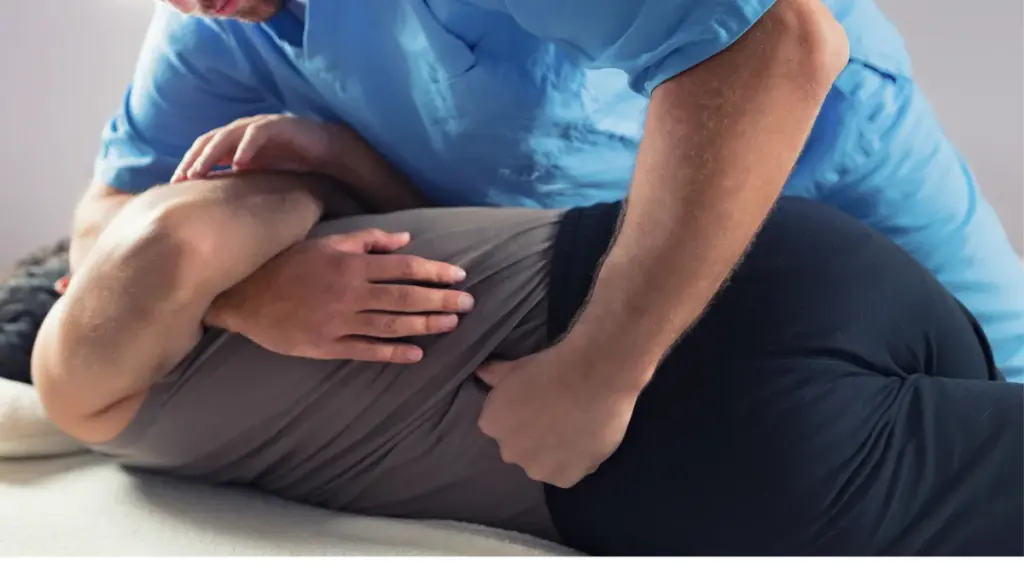
Alongside that, adjustment restores motion to the lumbar and pelvic joints, and soft tissue work addresses the muscle involvement, which matters particularly where the piriformis is part of the problem.
Progress is measured against something specific rather than a general sense of improvement. The most useful marker is centralisation: pain that was running to the foot pulling back to the knee, then to the buttock, then to the back. That is the sign treatment is working, and it usually happens before the overall intensity drops.
Not sure if this is what you need?
Call the clinic and we will tell you whether this is something we treat.
What to do meanwhile
Keep moving within comfort. Prolonged sitting increases pressure on the lumbar discs and typically makes disc-related sciatica worse, so break up long periods at a desk or in a car. Walking is usually well tolerated. Bed rest beyond a day or two slows recovery.
How long it takes
Many cases improve over several weeks with appropriate treatment, and disc-related sciatica usually takes longer than sciatica arising from joint or muscle involvement. That is worth knowing at the start, because the middle of a course of treatment is where people give up on something that was working.
What is not normal is worsening. Symptoms that are intensifying, weakness in the leg or foot that is progressing, or any loss of bladder or bowel control need reassessment immediately rather than another appointment next week. Most people with sciatica never need surgery, but the small number who do are identified by watching for exactly those signs.
Booking
Call 918-615-3433 to book an examination for sciatica in Tulsa.
The information on this site is general and is not medical advice. It does not replace a consultation with a licensed provider. Individual results vary.