Skip to content
8165 S. Mingo, Ste 200, Tulsa, OK Mon–Thu 9–1 & 3–6 · Fri 9–11

Chiropractic Care in Tulsa

Hands-on adjustments for back pain, neck pain, sciatica and headaches, from a clinic that examines you before it treats you.

A chiropractor applying pressure to the lower back of a patient lying face down on a treatment table
Gentle, precise spinal adjustments
Chiropractic care

Care built around what the exam finds

Our chiropractors treat patients through manual adjustments of the spine, and the plan is built after an examination rather than before it. For most of the people we see, and particularly for low back pain, chiropractic is the primary treatment. Where a patient has other medical conditions it works alongside their medical care instead of replacing it.

An adjustment is a controlled, specific movement applied to a joint that is not moving as it should. Restoring that motion reduces the mechanical irritation on the surrounding nerves and muscle, which is why patients often report that the tightness lets go before the pain does. It is a specific movement to a specific joint, which is why the exam has to come first.

We work hand in hand with other health care providers and refer patients on when a condition warrants it. If chiropractic is not a suitable treatment for what you have, we will say so at the first visit.

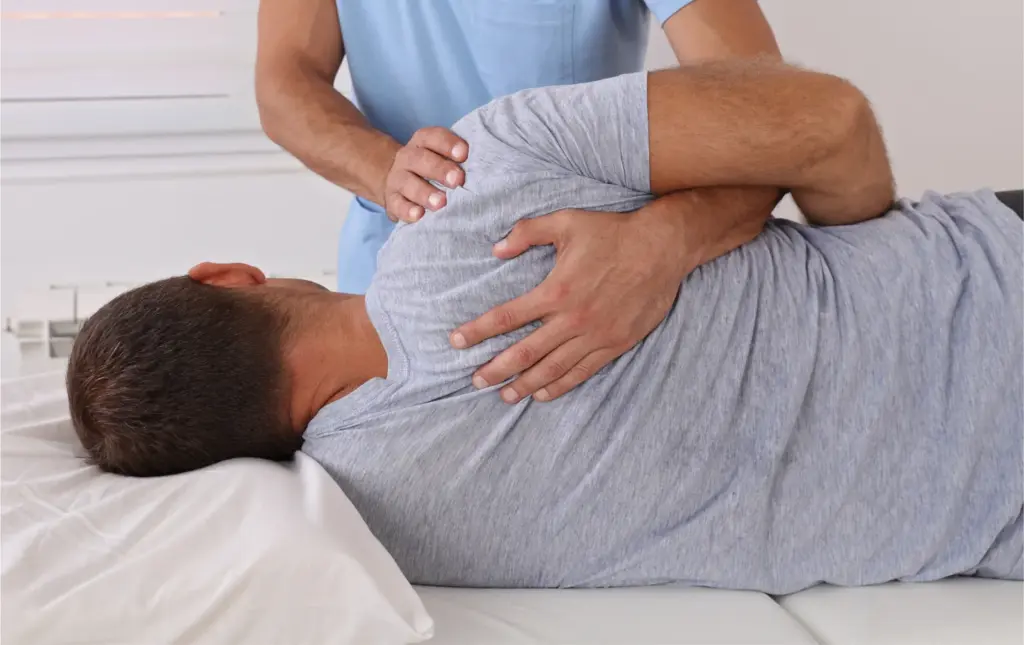
A chiropractor applying pressure to the lower back of a patient lying face down on a treatment table
Computerised decompression tables
Non-surgical relief

Spinal decompression

Spinal decompression is a non-invasive, non-surgical treatment for back and neck pain caused by the discs. Our computerised decompression tables apply intermittent traction at set angles and pressures, which creates negative pressure inside the disc. That relieves pressure on irritated nerves, increases blood and nutrient flow into the disc, and restores normal motion.

Patients treated this way often get relief from arm and leg numbness, sciatica, headaches and spasms alongside the back pain itself. It is the treatment we reach for when the problem is disc-related or when degenerative arthritis is narrowing the space a nerve has to pass through. Read more on the spinal decompression page.

Decompression is not recommended if you have

  • Pregnancy
  • Fracture
  • Tumour
  • Abdominal aortic aneurysm
  • Advanced osteoporosis
  • Metal implants in the spine

This is a safety screen, not a formality. Tell us about any of these before treatment begins.

For the whole family

Family and pediatric chiropractic

Chiropractic care for children focuses on how well the nervous system is functioning, using light, sustained contact rather than the manual thrust an adult would receive. Our chiropractors treat these conditions in younger patients, and you can read more on the family and pediatric page.

  • ADHD
  • Colic
  • Ear infections
  • Prenatal care and wellness
  • Pediatric care
  • Pediatric wellness
A person seated in a car holding their neck after a collision
Personal and auto injury

Injured in a car accident?

Our chiropractors evaluate, treat and rehabilitate accident injuries, and there are specific reasons chiropractic care works well after a crash.

It restores motion

Inflammation makes tissue stiff, and stiff tissue heals slowly because ligaments get little blood supply at the best of times. Mobilising the joint increases blood flow and nutrients into the area.

It reduces pain

Spinal manipulation has a real evidence base for neck and low back pain, which is why it is one of the non-drug options clinical guidelines list first.

It settles the stress response

A crash puts the body into a fight or flight state that keeps muscle guarded and sleep broken. Patients frequently report that easing after treatment starts.

What else we offer alongside an adjustment

Adjustments rarely work in isolation. Muscle that has been guarding a painful joint for months will pull it straight back out of place, which is why massage therapy is part of a lot of treatment plans here. Where the problem is disc-related, spinal decompression does work an adjustment cannot.

If your pain has a specific name, we have written about it in detail: back pain, neck pain, sciatica, headaches and migraines, whiplash and long-standing pain.

Chiropractic is one of several fields with a substantial evidence base for low back pain. The National Institute of Neurological Disorders and Stroke publishes a plain-language overview of back pain and the treatments used for it.

How treatment usually goes

The first appointment is a history and an examination. We ask what hurts, when it started, what makes it worse and what your day physically demands of you, then test range of motion and check the spine segment by segment. You get the findings explained in plain language before anything is decided.

From there you get a plan with a rough number of visits and a description of what should change and roughly when. Early on the visits are usually closer together, then they taper as the joint holds its correction for longer. If nothing has shifted by the point we said it would, that is a signal to change the approach or investigate further, not to book more of the same.

Most patients are asked to do something between visits. That might be a stretch, a change to how a workstation is set up, or advice on how to sleep with a painful shoulder. The joint work goes considerably further when the thing that caused the problem stops happening every day.

What to expect afterwards

Some soreness after a first adjustment is normal, particularly if the problem is long-standing. It generally feels like the ache after unfamiliar exercise and settles within a day or two. Drinking water, moving gently and avoiding a hard workout that evening all help. Tell us if the soreness is sharp, spreading or lasting beyond a couple of days, because that changes what we do next.

Who should not be adjusted

Some conditions rule out manual adjustment of the affected area, including an unstable fracture, a bone tumour, an active infection in the spine and severe untreated osteoporosis. Blood thinners, recent spinal surgery and inflammatory joint disease all change the approach. This is exactly why the exam and history come first, and why we ask about your medications and past surgery.

Booking an appointment

Call 918-615-3433 to schedule a chiropractic consultation in Tulsa. No referral is needed, we accept insurance and auto claims, and new patients are welcome.

The information on this site is general and is not medical advice. It does not replace a consultation with a licensed provider. Individual results vary.

FAQ

Chiropractic questions patients ask

What conditions can chiropractic care treat?

Low back pain, neck pain, sciatica, headaches that begin in the neck, joint pain and injuries from car accidents make up most of what we see. Our chiropractors also treat pregnant patients, infants and children for conditions including colic, ear infections and ADHD.

Do I need a referral?

No. Contact the clinic directly and we will book you a consultation, then coordinate with your other providers where that helps.

Is it safe for children?

Yes. Pediatric technique is gentle and specific to a developing spine, and our chiropractors treat patients from newborns through the teenage years.

Will I be adjusted at the first visit?

Often, but not always. If the exam points to a disc problem, a possible fracture or anything needing imaging, we investigate before we treat.

How many visits will I need?

A recent strain often settles in a handful of visits. Disc problems and collision injuries take longer and start with a heavier schedule that tapers. You get an estimate after the exam.

Does an adjustment hurt?

Most patients describe pressure and then relief. The sound is gas moving in the joint fluid. If an area is too inflamed we use a different technique.

Ready to feel better?

Call the clinic and we will get you booked for a consultation.